Why 9 Months Matters
Nine months marks a huge shift. Your baby is no longer a newborn in any sense. They're becoming a person—with preferences, personality, and the ability to move around and explore. They're also testing your patience in entirely new ways (hello, separation anxiety).
At 9 months, your baby's brain is:
This is all normal, developmentally smart stuff. And yes, it's exhausting.
---
Gross Motor Milestones at 9 Months
Crawling Styles (All Normal)
At 9 months, most babies are moving—but how varies widely:
Classic crawling: Hands and knees forward, alternating limbs. The storybook version.
Scooting on bottom: Some babies scoot backward first, then sideways, then forward. Totally fine.
Creeping: On hands and feet (less common, but works).
Military crawl: Belly crawling using forearms.
No crawling yet: Some babies skip crawling entirely and go straight to pulling up. Still normal.
The key: By 12 months, your baby should be moving forward intentionally—however they do it. If they're still completely stationary at 12 months (not reaching for toys, not rocking, not trying to move), mention it to your pediatrician.
Sitting Without Support
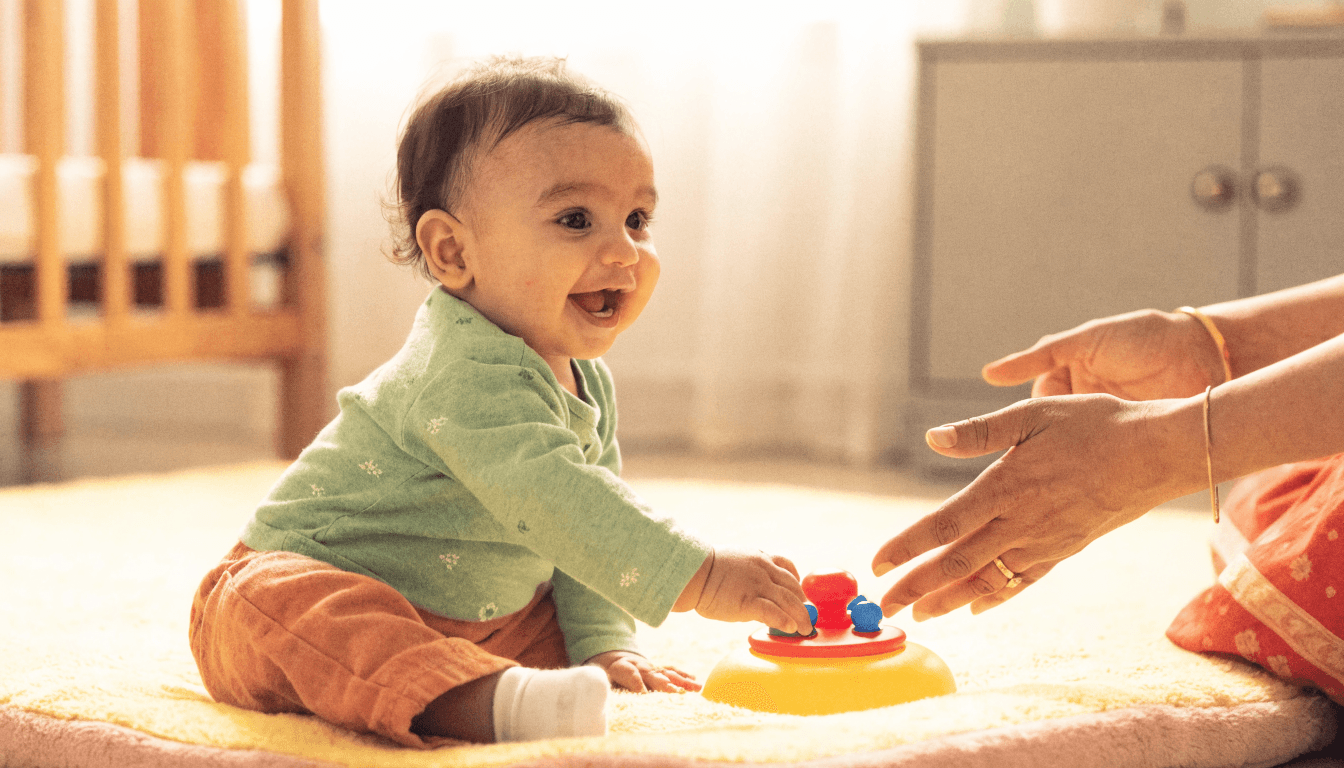
At 9 months, most babies can sit alone for several minutes without falling. Some are still wobbly. If your baby sits, they may:
Red flag check: If your baby isn't sitting at all by 9 months and shows no interest in trying, check with your pediatrician.
Pulling to Stand
Many 9-month-olds are pulling themselves up using furniture. They:
The cruising phase: Soon they'll shuffle along furniture. This is the bridge to independent walking (which might not happen until 15–18 months—totally normal).
Climbing Attempts
Some 9-month-olds start climbing stairs, couches, or any surface. This is hilarious and terrifying. They have zero spatial awareness of danger.
Safety check: Install gates at stairs. Watch them on couches. They think they're invincible.
---
Fine Motor Milestones at 9 Months
The Pincer Grip
By 9 months, most babies can pick small objects using their thumb and fingers (not the whole fist). This is a huge milestone—it means they're ready for finger foods.
What they do:
Passing Objects Between Hands
A simple skill with big meaning: they can now hold something in one hand and pass it to the other. This means they understand their hands are separate from each other—foundational for all future fine motor skills.
Raking and Releasing
At 9 months, they can:
Parental reality: They'll throw food off the high chair 500 times. This is learning, not defiance. Fun fact: they're testing gravity, cause-and-effect, and your patience simultaneously.
Banging Two Objects Together
Give them two wooden spoons or blocks. They'll bang them together loudly. This is:
---
Language Milestones at 9 Months
What They Understand
Your 9-month-old understands way more than they can say. They:
What They Say
Speaking varies massively:
The trick: Babies often use these sounds weeks before they mean them. "Dada" might be a random sound, not an actual reference to dad.
Babbling with Intent
At 9 months, they're babbling more—longer strings of sounds. They might:
Bilingual babies: If you speak multiple languages at home, expect slightly delayed single-language vocabulary (they're learning two sets of words), but catch up by 18 months easily.
Gesturing
This is huge: they might:
Gesturing actually predicts language development. If they're gesturing, their language will come.
---
Social & Emotional Milestones at 9 Months
Stranger Anxiety & Separation Anxiety
At 9 months, your baby might suddenly panic when:
This is not a sign of a problem. It's a sign their brain is working perfectly—they now understand that you exist even when they can't see you, and they prefer you to strangers.
What helps:
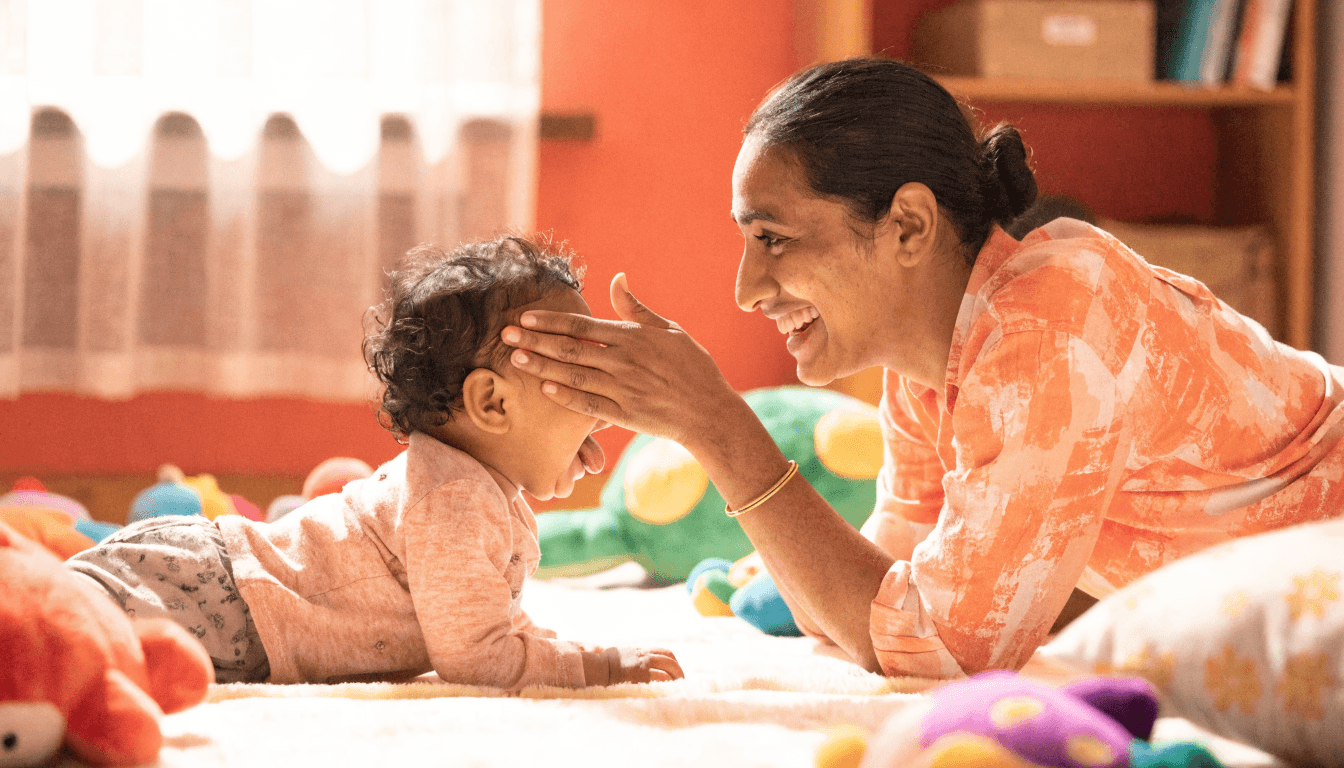
Playing Peek-a-Boo
At 9 months, they love peek-a-boo because they understand object permanence. You disappeared! You came back! Magical. They might even initiate it.
Showing Preferences
Your 9-month-old:
Enjoying Social Interaction
They love:
---
Cognitive Milestones at 9 Months
Object Permanence (Mostly)
They now understand that things exist even when hidden. This is why they look for toys under blankets and check if you're really gone.
Cause-and-Effect Understanding
They understand:
This leads to endless experimentation (and parental frustration—especially with phone buttons, light switches, and remote controls).
Problem-Solving
Simple problem-solving begins:
Imitation
They start copying simple actions:
---
Sleep at 9 Months
How Much Sleep They Need
Nine-month-olds typically need:
Reality check: This is an ideal. Many 9-month-olds sleep less, some sleep more. If your baby seems rested and healthy, their sleep is probably fine.
Sleep Regression
Many 9-month-olds hit a sleep regression. Suddenly:
This usually lasts 2–4 weeks. Causes include:
What helps: Consistency, presence, and patience. It passes.
Common Issues
Night wakings: Still normal at 9 months. Some babies wake once per night; others wake more. Your pediatrician can rule out hunger or discomfort.
Early waking: Some babies wake at 5–6 AM. If they're sleeping 10+ hours total, that's fine. If not, it might signal they need more daytime sleep.
Nap resistance: They understand "nap time" now and might resist. Routine helps.
---
Eating at 9 Months
Ready for Finger Foods
At 9 months with good pincer grip, most babies can:
Safe finger foods:
Safety rule: Avoid small, hard, or choking-risk foods (peanuts, hard candy, grapes whole).
How Much They Eat
At 9 months, breast milk or formula is still the main nutrition source. Food is exploration and learning. A 9-month-old eating just a few pieces of food per meal is normal.
Typical pattern:
---
Teeth at 9 Months
Teething Timeline
Many 9-month-olds are teething, but not all. First tooth arrival varies:
Genetics matter more than age. If your parents had late teeth, your baby probably will too.
Signs of Teething
What Helps
What doesn't help: Amber necklaces (choking risk), benzocaine gels (unsafe for babies), or excessive fussing (not every cry is teething).
---
India-Specific Developmental Observations
Parenting in India comes with unique contexts:
Climate Impact
Heat and humidity affect sleep and activity levels:
Joint Family Dynamics
Babies with multiple caregivers (grandparents, aunts, uncles) often:
Developmental Timeline Variation
Cultural variation is real. Some observations:
---
When to Talk to Your Pediatrician
All babies develop differently. But these warrant a conversation with your pediatrician:
Early support works. If you have concerns, bring them up. No judgment—just data.
---
The Reality Check
Here's what 9-month-olds are actually like:
✅ They're faster now—you can't just put them down anymore.
✅ They're more intentional—throw-the-food-off-the-chair is on purpose.
✅ They're testing boundaries—"no" is fascinating, so they do it immediately.
✅ They're exhausting—they need more supervision and engagement.
✅ They're delightful—they laugh, learn, and show personality.
Every 9-month-old is different. Some are cautious; others are daredevils. Some are quiet; others are chatty. Some crawl at 6 months; others at 12. All of it is normal.
---
What Comes Next
By 12 months, many babies will:
---
Get Daily Developmental Milestones for Your 9-Month-Old
Rather than worry about "where they should be," get personalized activity suggestions matched to your baby's exact stage—activities that naturally support their development.
[Start Your Free WhatsApp Companion →](/api/wa-start)
Every day, a new activity for your 9-month-old. Designed to celebrate where they are, not stress about where they should be.