Why Games Matter at 9 Months
At 9 months, your baby's brain is in rapid-growth mode. While development happens through everything they do, structured play accelerates learning of:
Cause-and-effect (I do this, that happens)
Social connection (turn-taking, anticipation)
Gross motor skills (crawling, climbing, reaching)
Fine motor skills (grasping, releasing, manipulating)
Cognitive skills (problem-solving, memory)
Language (hearing words, responding, communication)The best games aren't fancy. They're repetitive, interactive, and involve you.
---
Movement & Gross Motor Games
Game 1: Crawling Race
How to play:
Get on hands and knees
Race across the room together
Let your baby win sometimes
Celebrate at the finish line
Repeat endlesslyWhy it works: Builds crawling strength, speed, confidence, and makes you both laugh.
Time: 8–12 minutes
---
Game 2: Climbing Mount Cushion
How to play:
Pile couch cushions
Show them how to climb over/under/around
Spot them closely
Celebrate each success
Let them exploreWhy it works: Gross motor strength, balance, spatial awareness, risk-taking.
Time: 12–15 minutes
---
Game 3: Chase Me
How to play:
Crawl toward them slowly
They crawl away (usually)
Reverse: they chase you
Take turns being the chaser
Keep it light and funWhy it works: Gross motor development, social interaction, joyful connection.
Time: 10 minutes
---
Game 4: Dance Together
How to play:
Play music (Bollywood, nursery rhymes, anything)
Hold their hands and sway/bounce
Dance to the beat
They might bounce, bounce, bounce
Spin gentlyWhy it works: Gross motor, rhythm, joy, bonding.
Time: 8–12 minutes
---
Game 5: Stairs Practice
How to play:
Sit with them on stairs (hold hand)
Practice climbing up slowly, one step at a time
Practice coming down (on bottom sometimes)
Go at their pace
Celebrate each stepWhy it works: Leg strength, balance, confidence, independence.
Safety: Always supervise. Gate at top if you have them.
Time: 10 minutes
---
Sensory & Exploration Games
Game 6: Treasure Basket
How to play:
Fill a basket with safe household items: wooden spoons, plastic bottles, cloth, scarves, wooden blocks
Let them pull out each item
Name each one: "Cold spoon! Soft cloth!"
They explore while you narrate
Rotate items weeklyWhy it works: Sensory input, vocabulary, fine motor, independent exploration.
Time: 15–20 minutes
---
Game 7: Water Play
How to play:
Shallow basin or tub of water
Float toys, cups, sponges
Let them splash, pour, play
You play alongside
Supervise closely (drowning risk)Why it works: Sensory play, cause-and-effect (I splash, water goes there), hand coordination.
Time: 12–15 minutes
Safety: Never leave unattended. Keep water shallow.
---
Game 8: Rice/Millet Sensory Box
How to play:
Shallow container with uncooked rice or millet
Let them dig, pour, move it around
Add small toys to hide/find
Use a spoon or cup
Let them feel the textureWhy it works: Sensory, fine motor, exploration.
Time: 15–20 minutes
Safety: Watch for pica (eating non-food items). If your baby mouths everything, skip this.
---
Game 9: Fabric Exploration
How to play:
Gather different fabrics: silk, cotton, linen, velvet, rough cloth
Let them feel, touch, grab
Pull scarves through their fingers
Drape over them
Let them pull offWhy it works: Sensory input, fine motor (grasping), texture exploration.
Time: 10 minutes
---
Game 10: Sound Exploration
How to play:
Bang wooden spoons on pots (loud!)
Shake containers with rice inside
Ring a bell
Crinkle paper
They'll imitate and exploreWhy it works: Cause-and-effect (I bang, sound happens), exploration, coordination.
Time: 8–10 minutes
---
Cognitive & Turn-Taking Games
Game 11: Peek-a-Boo (The Gold Standard)
How to play:
Hide your face behind a blanket
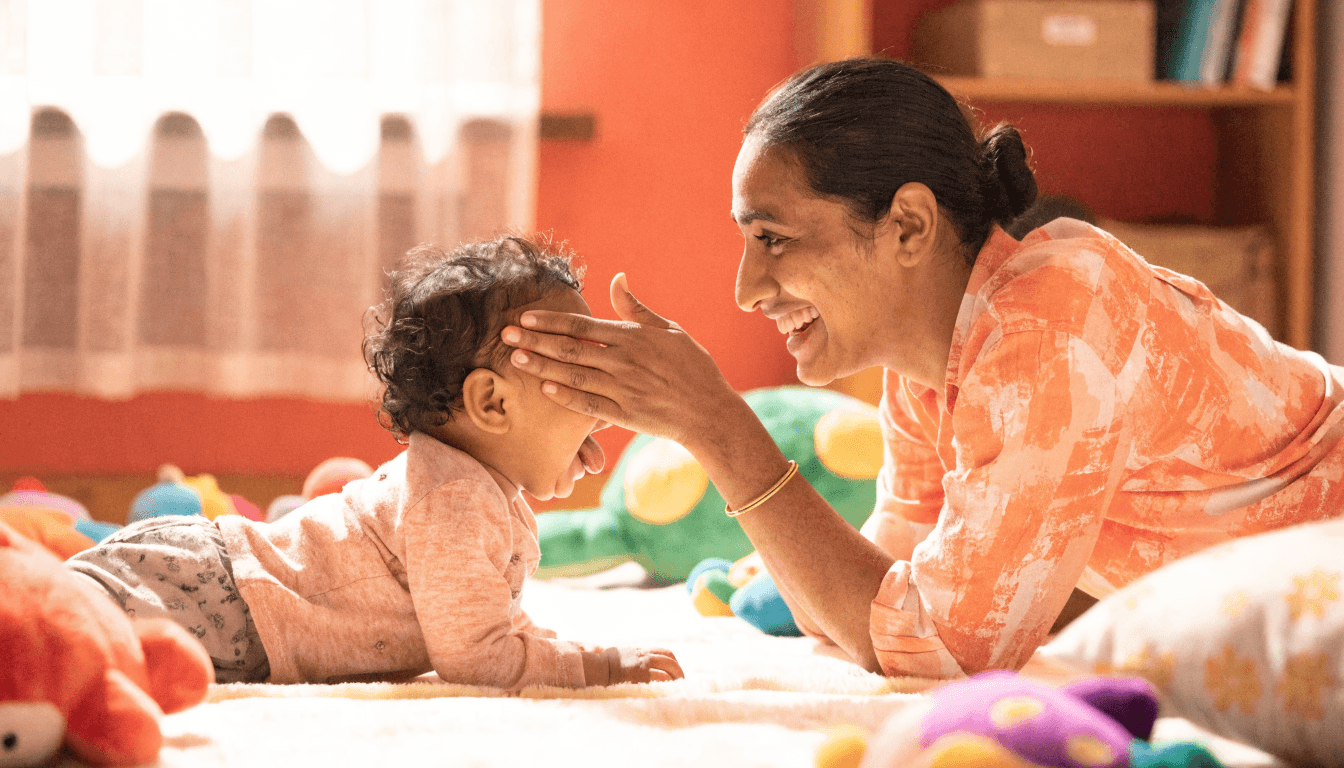
Pop out: "Peek-a-boo!"
Repeat 50 times (they love this)
They might try hiding their own face
They anticipate and giggleWhy it works: Object permanence (you exist even hidden), anticipation, joy, connection.
Time: 10–15 minutes
---
Game 12: Ball Rolling
How to play:
Roll a soft ball across the floor toward them
They chase it
Roll it back and forth gently
Let them catch or crawl after itWhy it works: Tracking movement, cause-and-effect, coordination, gross motor.
Time: 10 minutes
---
Game 13: Stacking & Knocking Down
How to play:
Stack 2–3 soft blocks
Let them knock it down (pure joy)
Rebuild and repeat
Eventually they'll try stackingWhy it works: Cause-and-effect, fine motor, anticipation, repetition.
Time: 12–15 minutes
---
Game 14: Where Is It? (Object Permanence)
How to play:
Hide a toy under a blanket (partially visible at first)
Ask: "Where's the toy?"
Let them find it
Celebrate the discovery
Gradually hide it more completelyWhy it works: Object permanence understanding, problem-solving, anticipation.
Time: 8–10 minutes
---
Game 15: Turn-Taking with Toys
How to play:
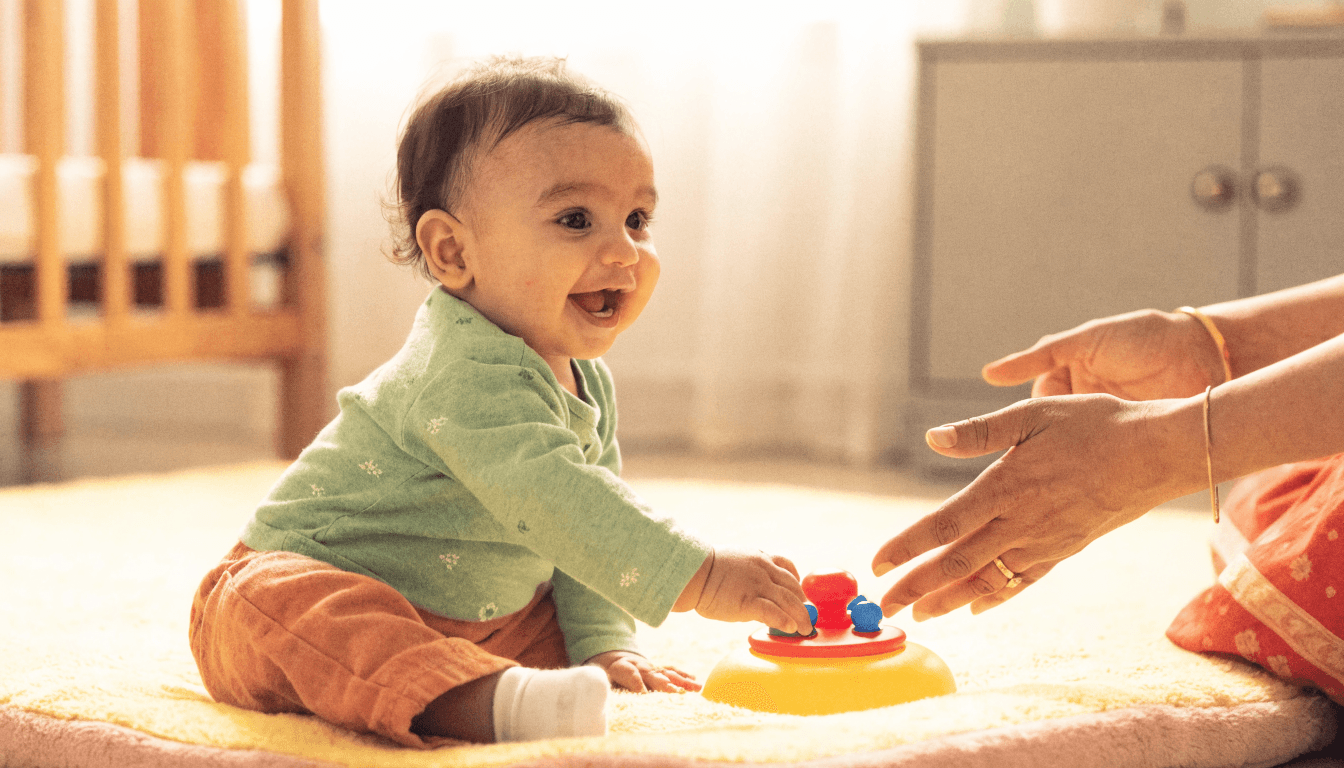
Hand toy to them
Take it gently back
Hand it again
Go back and forth
Eventually they'll hand it backWhy it works: Turn-taking, sharing (baby version), communication, connection.
Time: 5–8 minutes
---
Fine Motor Games
Game 16: Container Exploration
How to play:
Plastic containers with lids
Show them how to put lids on/off
Let them explore
Put small toys inside, let them open
Repetitive and simpleWhy it works: Fine motor (grasping, twisting), problem-solving, spatial understanding.
Time: 10–12 minutes
---
Game 17: Pinching & Picking Up
How to play:
Put small (safe) objects on a table
Show them picking them up with fingers
Let them try: pea-sized foods, O-shaped cereal, small toys
RepeatWhy it works: Pincer grip development (thumb + finger), fine motor, coordination.
Time: 8–10 minutes
---
Game 18: Pulling Out & Putting In
How to play:
Tissue box with scarves inside
Let them pull scarves out endlessly
Put them back in
RepeatWhy it works: Fine motor, cause-and-effect, simple repetitive joy.
Time: 15–20 minutes
---
Language & Social Games
Game 19: Singing Songs
How to play:
Sing nursery rhymes or any songs
Use hand motions (Twinkle Twinkle, wheels on bus, etc.)
Repeat favorites
Watch for bouncing/dancing
They might try vocalizing alongWhy it works: Language input, rhythm, bonding, joy.
Time: 10–15 minutes
---
Game 20: Name the Animals
How to play:
Look at picture books
Point at animals
Make animal sounds: "The dog says woof woof!"
Wait for baby to respond
RepeatWhy it works: Vocabulary, animal recognition, turn-taking, connection.
Time: 8–10 minutes
---
Game 21: Copying Sounds
How to play:
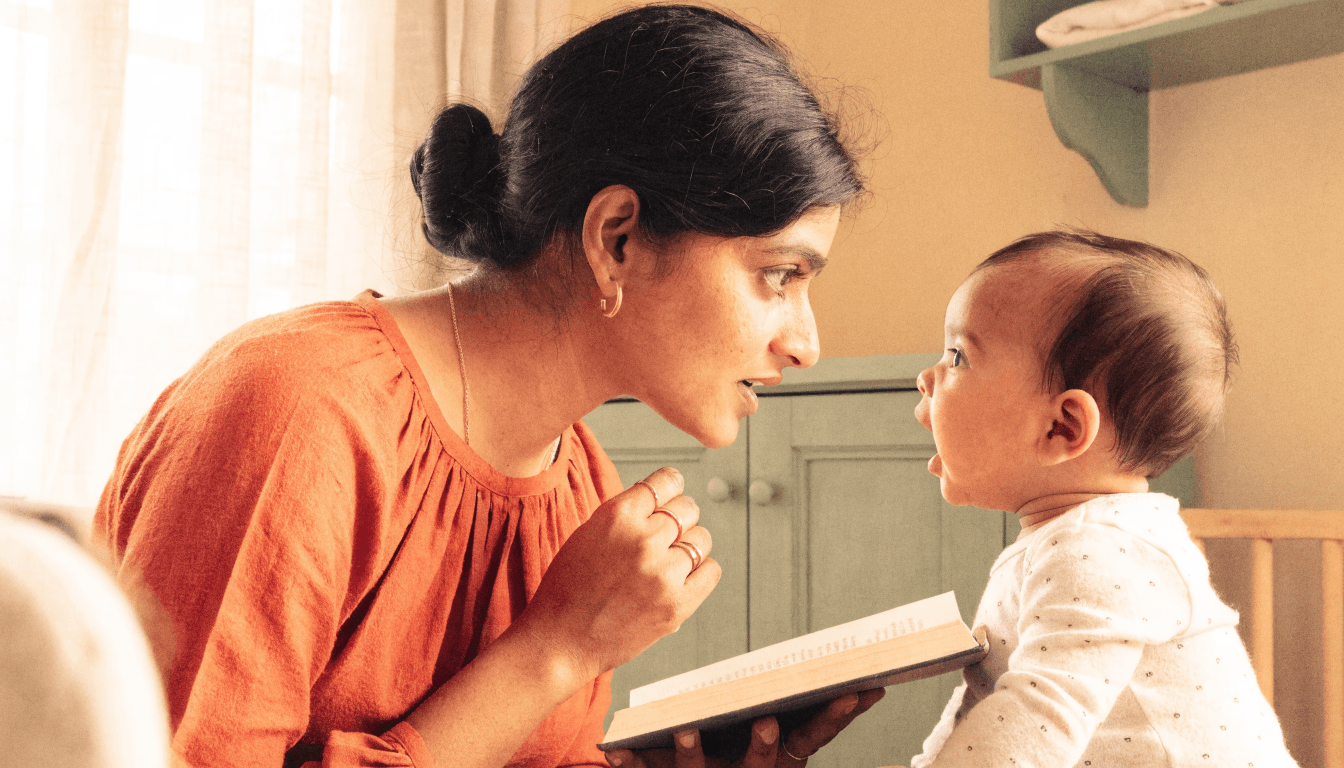
Make a sound: "Bababa"
Wait for them to copy
Respond enthusiastically
They make a sound, you copy
Back-and-forth conversationWhy it works: Language, turn-taking, connection, they're "talking."
Time: 8 minutes
---
Interactive Games
Game 22: Tickling & Physical Play
How to play:
Gentle tickles on tummy, feet
They laugh and anticipate
Sing while tickling: "Round and round the garden..."
Physical affection and play
Let them initiateWhy it works: Gross motor, joy, bonding, touch development.
Time: 5–10 minutes
---
Game 23: Gentle Tossing
How to play:
Toss them gently in the air (a few inches, safely)
Catch them
They squeal and anticipate
RepeatWhy it works: Trust, joy, anticipation, physical bonding.
Safety: Only if you're confident and calm. Stop if you feel nervous.
Time: 5 minutes
---
Game 24: Pointing Game
How to play:
Point at things: "There's the fan! Ceiling! Mommy!"
Eventually they'll point too
Name what they point at
Back-and-forth pointingWhy it works: Vocabulary, gesture development, shared attention, connection.
Time: 10 minutes
---
Game 25: Exploration Walk
How to play:
Walk around house with baby
Point out: stairs, door, window, plant, dog
Name everything
Let them touch (safe items)
They're learning the worldWhy it works: Language, motor skills, world awareness, bonding.
Time: 15–20 minutes
---
India-Specific Activities
Heat-Management Play
Early morning (before 9 AM) or evening (after 5 PM) for outdoor play
Water play (splashing) to cool down
Indoor games during heat
Monsoon play: puddle splashing (supervised), dancing in light rainCultural Games
Singing Hindi nursery rhymes (language + culture)
Playing with traditional toys (wooden blocks, cloth dolls)
Involving extended family in games (grandparents love playing)Space-Conscious Activities
If you have limited space:
Treasure basket works in small spaces
Ball rolling in hallways
Peek-a-boo anywhere
Stacking/knocking down
Water play in bathroom---
Activity Planning Tips
Daily Rotation
```
Morning:
1 movement game (crawling race, climbing)
1 sensory game (treasure basket, water play)Afternoon:
1 cognitive game (peek-a-boo, ball rolling)
1 fine motor game (container exploration)Evening:
1 calming game (singing, reading)
```
Session Length
9-month-olds can focus 10–15 minutes per activity
Rotate activities when interest wanes
Multiple short sessions beat one long session
Flexibility matters—some days they'll want moreYour Role
Play alongside them, not just supervising
Narrate what they're doing
Model enthusiasm (they learn from your joy)
Follow their lead (sometimes they want to explore, not play your game)---
Red Flags: When to Chat with Pediatrician
Regarding play & engagement:
Shows no interest in toys or exploration
Doesn't respond to your voice or games
Doesn't try to interact (no back-and-forth)
No babbling or attempts at communicationRegarding motor skills:
Not crawling or moving toward crawling
Not able to sit without support
No grasping or manipulation of objectsNormal variation:
Prefers one type of play to others (fine motor or gross motor)
Cautious about new activities
Wants to play solo mostly---
The Goal: Joy + Learning
The best game is the one that makes both of you happy. Your 9-month-old doesn't care about educational value. They just want to play with you.
The learning happens naturally when:
You're present
You're engaged
You're enjoying each other
You're repeating games they love
You're narrating and modelingKeep it simple. Keep it joyful. The development follows.
---
Get Daily Game Suggestions for Your 9-Month-Old
Rather than stress about "developmental play," get daily activity ideas matched to your baby's exact interests and your available time.
[Start Your Free WhatsApp Companion →](/api/wa-start)
Every day, one game or activity for your 9-month-old. Simple, joyful, developmentally aligned. That's it.