Why 14 Months Is a Magic Window for Play
Your 14-month-old's brain is forming roughly 1 million new neural connections every second. Play isn't entertainment—it's architecture. Right now, they're learning to:
The plot twist? The fanciest toy won't beat your presence. A 14-month-old learns fastest when you're playing alongside them, narrating, and celebrating their discoveries.
---
Gross Motor Activities (Building Strength & Balance)
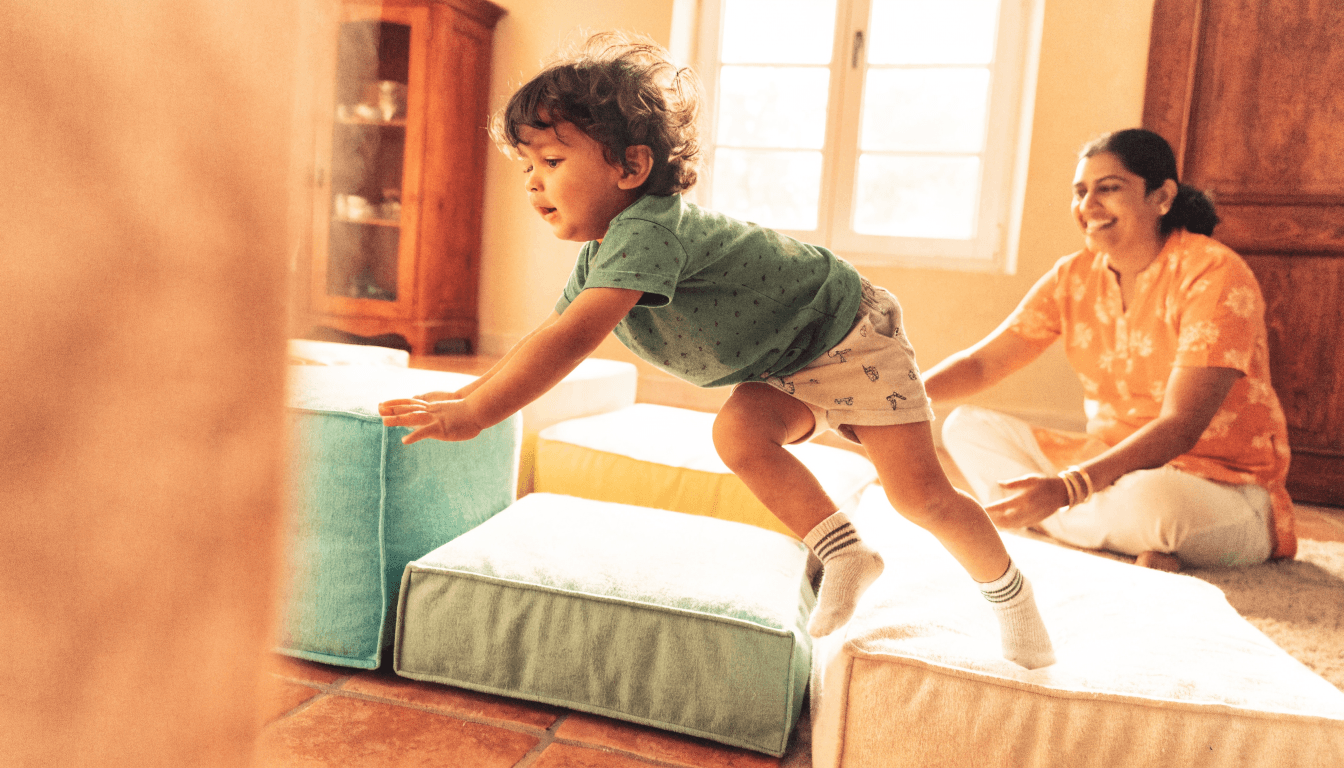
Activity 1: Cushion Climbing Course
What you need: Couch cushions, pillows, a low chair, an open floor space.
How to play:
Why it works: Builds balance, leg strength, and spatial awareness. Falls are safe on cushions.
Duration: 12–15 minutes
India angle: Cushion courses are free (use sofa cushions and old pillows); no need for a pricey play gym. Works great for monsoon indoor play.
---
Activity 2: Dance Party with Movement
What you need: Phone or speaker, music you enjoy (Bollywood songs work great!).
How to play:
Why it works: Coordination, rhythm, confidence, and you both get a mood boost.
Duration: 10–15 minutes
---
Activity 3: Ball Rolling & Chasing
What you need: A soft ball (tennis ball, foam ball, or rolled-up socks).
How to play:
Why it works: Gross motor control, turn-taking, following objects.
Duration: 10 minutes
---
Fine Motor Activities (Building Hand Dexterity)
Activity 4: Water Play Sorting
What you need: A basin or shallow tub, water, floating toys, a small cup.
How to play:
Why it works: Hand-eye coordination, pincer grip development, cause-and-effect learning.
Duration: 12–15 minutes
Safety: Supervise water play always. For heat management in Indian summers, do this early morning or evening.
---
Activity 5: Treasure Basket Exploration
What you need: A basket, household items: wooden spoons, plastic bottles, fabric scraps, rubber bands, cardboard rolls.
How to play:
Why it works: Sensory input, vocabulary building, fine motor exploration.
Duration: 15–20 minutes
---
Activity 6: Color Sorting with Containers
What you need: An egg carton or muffin tin, objects in 2–3 colors (red blocks, blue balls, yellow toys).
How to play:
Why it works: Color recognition, fine motor placement, categorization.
Duration: 10–12 minutes
---
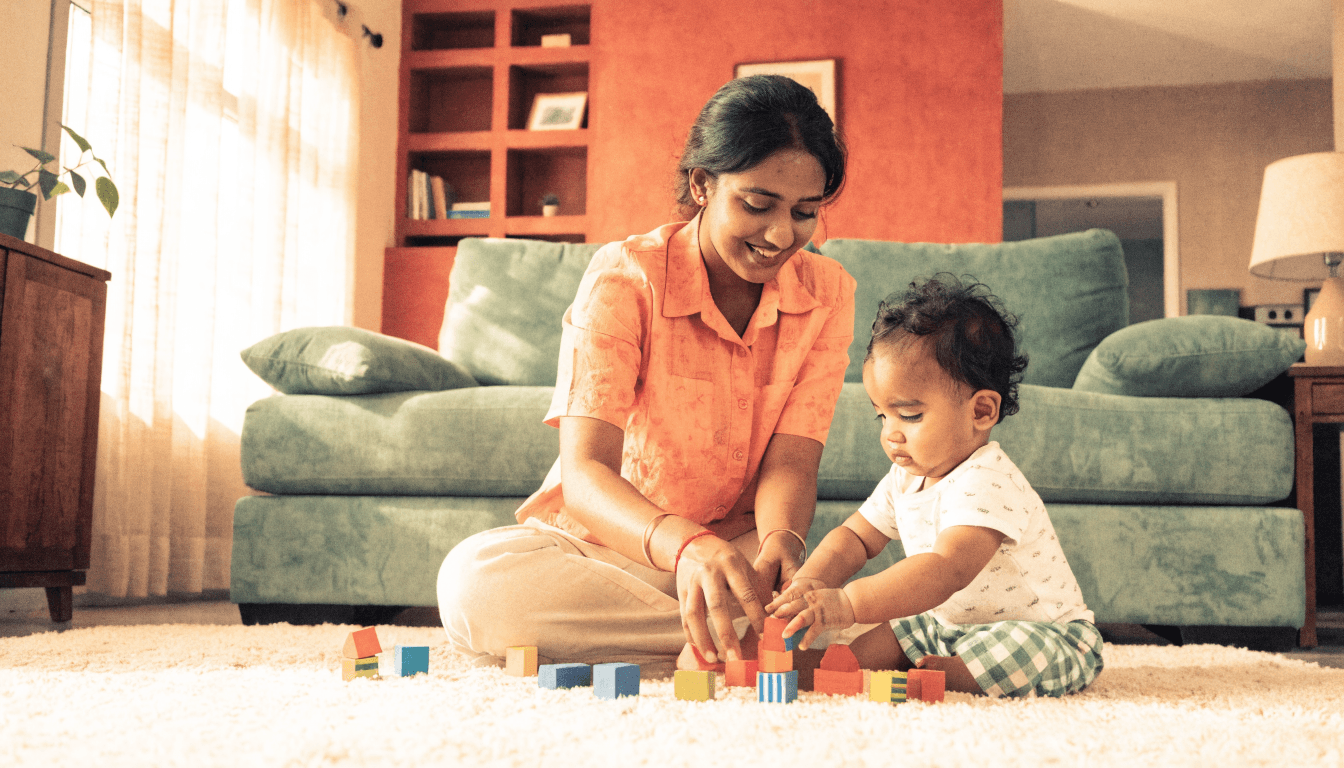
Activity 7: Stacking & Knocking Down
What you need: Soft blocks, foam blocks, or rolled-up socks.
How to play:
Why it works: Fine motor control, cause-and-effect, persistence.
Duration: 15–20 minutes
---
Sensory & Creative Activities
Activity 8: Washable Paint Exploration
What you need: Washable, non-toxic paint, paper, a brush or sponge, newspaper (to minimize cleanup stress).
How to play:
Why it works: Sensory play, large motor control, creative expression.
Duration: 10–15 minutes
Cost: A bottle of washable paint costs ₹150–300 and lasts months.
---
Activity 9: Musical Instrument Play
What you need: Pots, wooden spoons, plastic containers, metal spoons.
How to play:
Why it works: Cause-and-effect, rhythm awareness, confidence.
Duration: 12 minutes
---
Activity 10: Sensory Rice Box (Zero Cost)
What you need: Uncooked rice or millet, a shallow container, small toys, a cup, a spoon.
How to play:
Why it works: Sensory input, fine motor, independent exploration.
Duration: 15–20 minutes
Safety: Watch for pica (eating non-food items). If your child tends to mouth things, skip this until they're older.
---
Language & Cognitive Activities
Activity 11: Picture Book Narration
What you need: A colorful board book, your voice.
How to play:
Why it works: Vocabulary explosion, listening, pointing reflex (pointing = language readiness).
Duration: 8–10 minutes
---
Activity 12: Cause-and-Effect Boxes
What you need: A tissue box with scarves, a plastic container with a tennis ball, a paper bag with crinkly paper.
How to play:
Why it works: Cause-and-effect, motor planning, repetition builds understanding.
Duration: 15 minutes
---
Activity 13: Hide-and-Find Toys
What you need: Toys, blankets, cushions.
How to play:
Why it works: Object permanence, problem-solving, turn-taking.
Duration: 10–12 minutes
---
Budget-Friendly Activities (Under ₹500 Total)
Activity 14: DIY Sensory Bottles
What you need: Clear plastic bottles, water, food coloring, rice, beads, glitter, tape (₹50–100 per set).
How to play:
Why it works: Visual tracking, cause-and-effect, safe for teething.
Duration: 10 minutes
---
Activity 15: Scarf Dancing & Waving
What you need: Old scarves, dupatta, or fabric scraps.
How to play:
Why it works: Movement, spatial awareness, joy.
Duration: 12 minutes
---
Activity 16: Container Play with Lids
What you need: Plastic containers, bowls, lids (repurposed from your kitchen).
How to play:
Why it works: Fine motor, spatial understanding, cause-and-effect.
Duration: 15 minutes
---
Games for Joint Family Homes
Activity 17: Grandparent Interaction Games
What you need: Clapping, singing, simple imitation.
How to play:
Why it works: Language modeling, social bonding, imitation.
Duration: 10 minutes
India note: These work beautifully in joint family settings. Grandparents often have endless patience for repetition, which toddlers need for learning.
---
Activity 18: Safe Outdoor Play (Heat-Managed)
What you need: Early morning or evening, open space, a ball or bucket.
How to play:
Why it works: Gross motor, sensory, vitamin D, outdoor confidence.
Duration: 15–20 minutes
India angle: Schedule around heat. Morning walks before 9 AM or evening after 5 PM are ideal. Start gradually to build heat tolerance.
---
When to Transition (What's Coming Next)
Activity 19: Introducing Puzzles
What you need: A simple 2–4 piece wooden puzzle or shape sorter.
How to play:
Why it works: Problem-solving, frustration tolerance, hand-eye coordination.
Duration: 8–10 minutes
---
Activity 20: Playing Alongside Peers (Parallel Play)
What you need: Another toddler, a shared space, duplicate toys.
How to play:
Why it works: Social learning, imitation, early friendship skills.
Duration: 20–30 minutes
Note: At 14 months, true cooperative play hasn't arrived yet (that's 2–3 years). Parallel play is the sweet spot.
---
The India-First Parenting Angle
A lot of Western parenting content assumes you have a dedicated playroom, expensive toys, and one-on-one parent time. Here's what works in Indian homes:
---
Red Flags (When to Chat with Your Pediatrician)
Every child develops differently. These are general benchmarks, not rules. But if your 14-month-old:
These might signal a developmental delay worth discussing with your pediatrician. Early support makes a difference. No judgment—just good information.
---
Your Takeaway
The best activity for a 14-month-old is the simplest one: you, beside them, playing.
No fancy app, no expensive toy, no Instagram-worthy playroom. Just narration, celebration, and repetition. "You're stacking! You're splashing! You're so clever!"
That's it. That's the whole system.
Start small—pick three activities from this list. Rotate them for two weeks. Notice what your child loves. Then add more. The goal isn't to do all 20; it's to have a reliable toolkit so boredom (and parental burnout) don't take over.
---
Ready to Make This Easier?
Every day, Better Parents Club sends a personalized activity matched to your child's exact age and stage, right to your WhatsApp. No scrolling articles. No decision fatigue. Just one activity a day, ready to go.
[Start Your Free WhatsApp Companion →](/api/wa-start)
Get today's activity for your 14-month-old. Free. Always.