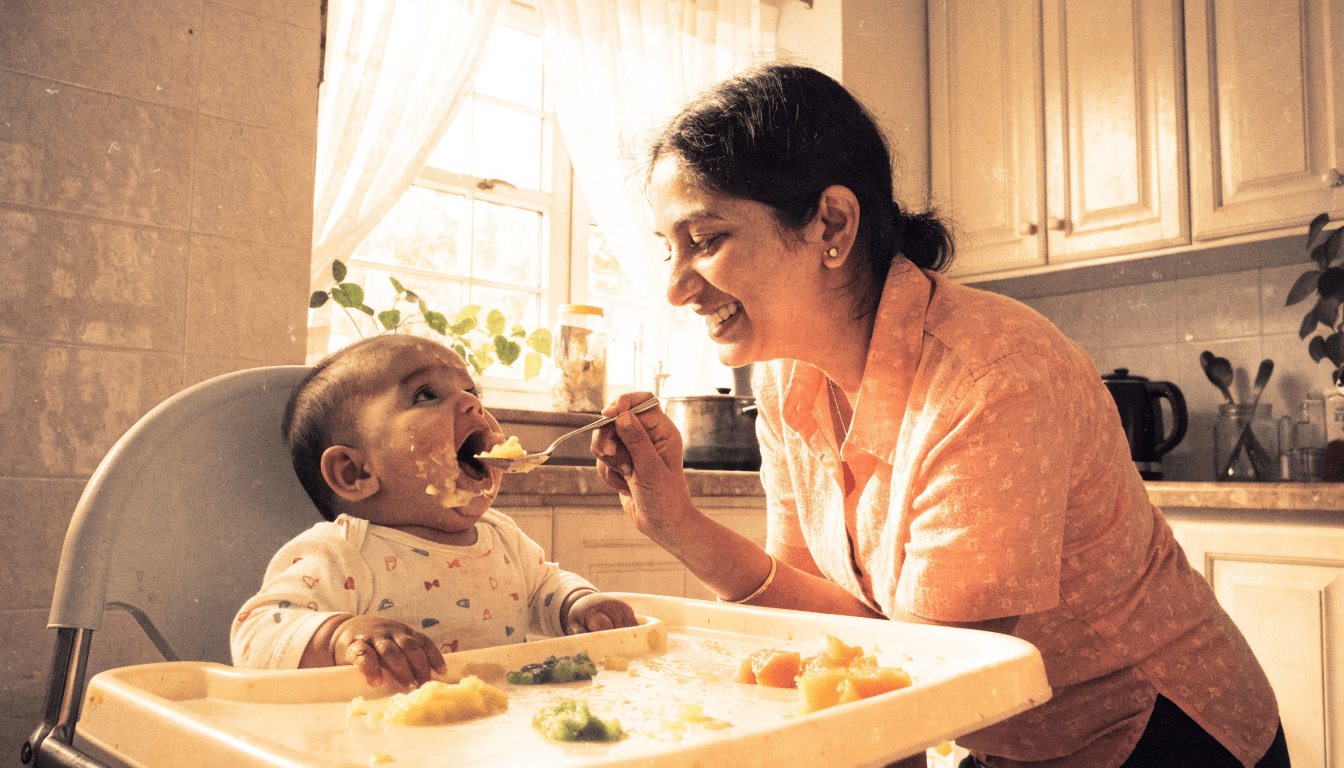
The Picky Eater Phase Is Real (And It's Normal)
Around 18–24 months, many toddlers suddenly become extremely picky. Yesterday they ate everything. Today they eat three beige foods and will literally starve before trying anything new.
This is completely normal.
Here's what's happening: their brain is developing independence, autonomy, and testing boundaries. Food is one of the few areas they have real control. So they exercise that control by refusing everything.
This is not:
It is:
---
Why Toddlers Become Picky (The Brain Science)
Independence & Autonomy
At 18–36 months, your toddler's #1 developmental job is asserting independence. Food is one of the few areas they control absolutely. So they do.
You say "try broccoli." They refuse broccoli. Why? Because you said it, and proving they have power over their body is more important than nutrition.
Neophobia (Fear of New Foods)
Toddlers are evolutionarily wired to be cautious about new foods. In a world where poison exists, suspicion of new things = survival. Your toddler is literally built to distrust new foods.
This is adaptive. It's also annoying when you're trying to feed them.
Sensory Processing
Some toddlers have genuine sensory sensitivities:
This isn't picky; it might be sensory processing. More on this later.
Autonomy Over Nutrition
Your toddler genuinely believes: "My body, my choice." And they're not wrong. But they're also a toddler with a limited worldview, so their choices are limited.
---
Strategy 1: Division of Responsibility (The Gold Standard)
This feeding framework, developed by pediatric nutritionist Ellyn Satter, works for picky eaters:
Your job:
Your toddler's job:
The magic: You control the menu; they control their appetite. This respects autonomy while maintaining structure.
How to implement:
At meals, offer:
Example meal:
You don't:
You do:
They get to:
No drama. They'll eat when hungry. And they're learning without pressure.
---
Strategy 2: Repeated Exposure (It Takes Time)
Studies show: toddlers try new foods an average of 10–15 times before accepting them.
Your toddler sees broccoli.
What helps:
This works for toddlers because:
Timeline: Can take weeks or months. Patience is the tool here.
---
Strategy 3: Model Eating (Kids Copy Caregivers)
Toddlers learn to eat by watching you eat.
If you:
They learn:
If you:
They learn:
Be honest: Kids notice your food preferences. If you hate carrots, it's hard to convince them carrots are great. But eating them without comment (neutral, not enthusiastic) helps more than you'd think.
---
Strategy 4: Let Them Choose (Within Limits)
Autonomy is huge. Give it in safe ways:
Good choices to offer:
Both options are acceptable to you. They choose. Autonomy = less resistance.
Avoid:
---
Strategy 5: Involve Them in Food Preparation
Toddlers who help choose/prepare food are more likely to try it.
Low-involvement:
Medium-involvement:
The magic: They feel ownership. "I made this." = more willingness to try.
---
Strategy 6: Make Mealtimes Pressure-Free
Pressure looks like:
Pressure-free looks like:
Why? Pressure creates battles. Power struggles around food often extend pickiness, not shorten it.
---
Strategy 7: Offer Indian Foods (Culture Matters)
If you're an Indian family, use traditional foods strategically:
Traditional "safe" foods toddlers often eat:
Using culture as strategy:
Spices matter: Some toddlers are sensitive to spice. Mild masala-based foods work better than heavy spices.
---
Strategy 8: Texture Matters More Than You Think
If your toddler refuses mixed foods, textures might be the issue:
Common texture preferences:
What helps:
This isn't stubbornness; it might be sensory processing. Respecting it actually helps expand their diet over time.
---
Strategy 9: Size & Presentation Matter
Toddlers have strong visual preferences:
What works:
What doesn't work:
Example: Carrot sticks (recognizable, orange, bite-sized) vs. shredded carrot in a sauce (is it a vegetable?).
---
Strategy 10: Snack Timing Affects Meals
If they're snacking too close to mealtime, they won't be hungry for meals.
Typical toddler eating schedule:
The rule: 2–3 hour gaps between eating. Snacks can fill small hunger, but not so much they skip meals.
If they refuse meals: Check the snack schedule. Often, a slightly earlier snack or skipped snack helps.
---
Strategy 11: Offer Water, Not Milk, Before Meals
If they drink milk right before meals, they fill up on milk and don't eat food.
Better approach:
Breast milk: If still breastfeeding, this is harder to control. But the principle is the same—try to time nursing away from main meals if pickiness is extreme.
---
Strategy 12: Don't Use Food as Reward/Punishment
Avoid:
Why? These create stress around food. Dessert becomes "the good food"; vegetables become "the punishment food." It backfires.
Instead:
---
Strategy 13: Know the "Beige Diet" Is Often Okay
Many picky toddlers live on:
Is this okay? If they're:
Then yes, it's manageable short-term. A pediatrician or nutritionist can ensure they're getting micronutrients (iron, calcium, B12) even on limited foods.
What you CAN do: Sneak nutrient density into safe foods:
What you CAN'T do: Force variety. It doesn't work. Time + strategies work.
---
When to Worry (vs. Normal Pickiness)
Normal picky eating:
Potentially concerning:
Conditions to discuss with pediatrician:
Getting help:
---
The India-Specific Reality
In Indian joint families, feeding pressure can be intense:
Pressure often comes from:
What helps:
It's hard to be pressure-free when your mother-in-law is watching. But consistency helps—and kids sense calm vs. stress around food.
---
Real Talk: This Phase Ends
Most picky eating phases:
You will not have a picky eater forever. You will have a toddler with a limited diet for a while. And that's okay.
---
Checklist: Pressure-Free Feeding Setup
```
☐ Understand Division of Responsibility (you control what/when/where; they control whether/how much)
☐ Offer meals 2–3 hours apart (consistent schedule)
☐ Include one safe food at every meal
☐ Neutral environment (no screens, calm table)
☐ Model eating and enjoying foods
☐ Let them serve themselves or choose from options
☐ No praise for eating, no punishment for not
☐ Repeated exposure (10–15 times for new foods)
☐ Avoid sneaking/hiding vegetables
☐ Trust their hunger; they'll eat when hungry
```
---
Get Daily Feeding Guidance for Your Picky Toddler
Rather than battle at every meal, get daily strategies and meal ideas matched to your toddler's preferences—designed to reduce pressure and build positive eating habits.
[Start Your Free WhatsApp Companion →](/api/wa-start)
Every day, one picky-eater-friendly meal idea or strategy. Plus reassurance that this phase is temporary and you're doing fine.