The Journey to First Words: A Beautiful Unfolding
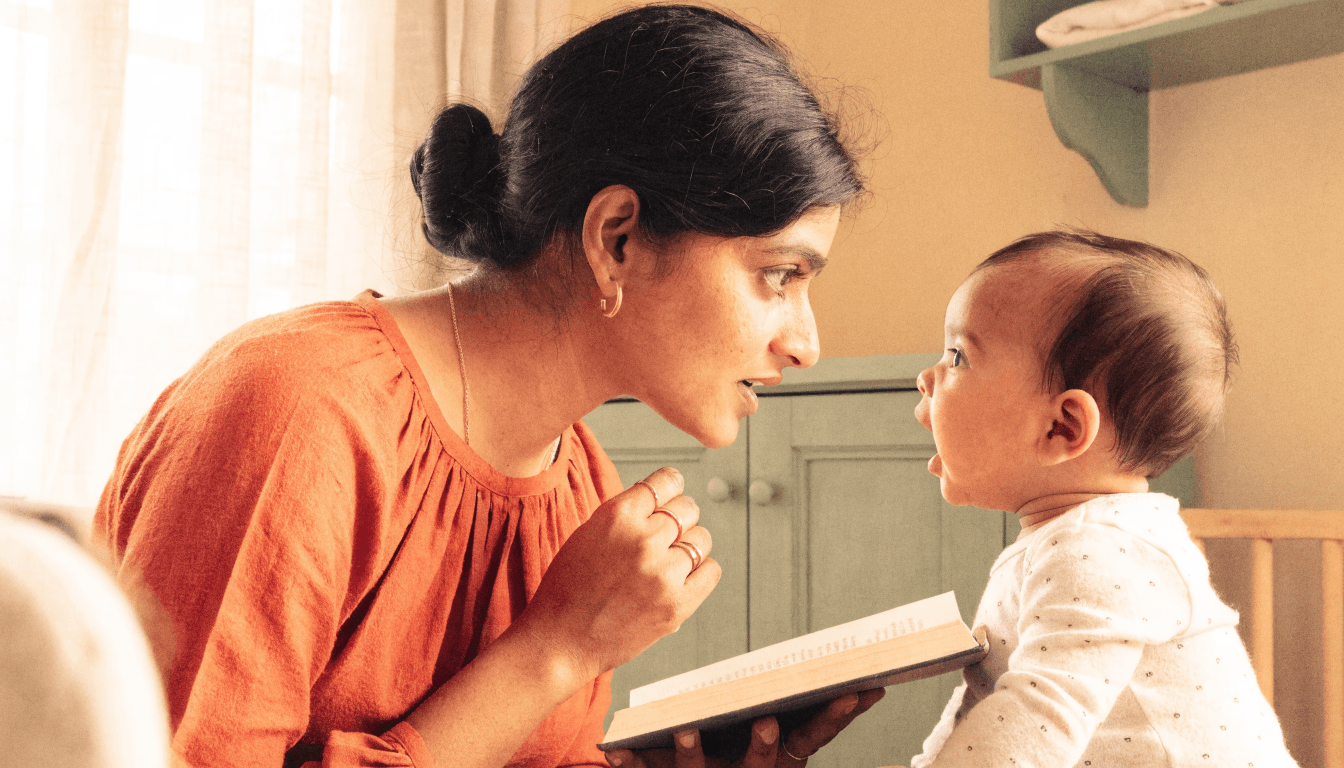
Language doesn't start with the first word. It starts at birth—or before. Your baby's brain is tuning to your voice before they're born (they hear you in utero).
Over the first 12 months, language develops through stages:
Listening & responding to sounds
Cooing & sounds
Babbling with intention
Understanding words
First wordsEach stage builds on the last. And the speed varies tremendously. All within normal range.
---
Months 0–2: Listening & Early Sounds
What's Happening
Your newborn's brain is tuning to language. They:
Recognize your voice (familiar from womb)
Turn toward sounds
Quiet when they hear familiar voices
May make reflexive sounds (cries, grunts, reflexive cooing)Receptive Language (Understanding)
They understand tone (gentle vs. sharp)
They respond to their name (sometimes)
Familiar voices = comfortSounds They Make
Crying (communicates hunger, discomfort, tiredness)
Grunting and cooing (reflexive, not intentional)
Squeaking
Random mouth soundsWhat You Can Do
Talk, sing, narrate constantly. "We're changing your diaper. It's wet, isn't it?"
Read aloud. Babies love listening to voices, even if they don't understand words.
Use varied tone. Questions (upward tone), statements, excitement—babies learn language patterns from tone.
Respond to their sounds. If they coo, coo back. Turn-taking begins.
Keep devices away. Your voice matters more than any app.---
Months 2–4: Cooing Begins
What's Happening
Around 2–3 months, your baby starts cooing: purposeful vowel sounds (ooooh, ahhhh, eeeee). This is intentional, not reflexive.
Receptive Language
Understanding expands
Recognize more voices
Understand tone/emotion better
Smile at faces and voicesSounds They Make
Cooing (vowel sounds only)
Squeals and squeaks
Laughter (around 3–4 months)
GurglesWhat You Can Do
Have "conversations." They coo, you respond. They coo again. Back-and-forth is building language.
Expand their sounds. They say "oooooh," you say "ooooooh, yes!" With animation.
Name emotions. "You're so happy! Listen to you laugh!"
Read together. Point at pictures, name them.---
Months 4–6: Babbling Begins
What's Happening
Around 4–6 months, babies start babbling: consonant-vowel combinations (bababa, dadada, mamama). This looks like first words but isn't yet. They're practicing sounds, not meaning.
Receptive Language
Understand some words (not most, but some)
Respond to name reliably
Understand tone/emotion clearly
Beginning to understand "no"
Anticipate familiar sequences (diaper time routine = baby readies)Sounds They Make
Babbling: ba-ba, da-da, ma-ma, ga-ga
Consonant + vowel combinations
Razzing (blowing bubbles)
High-pitched squeals
Repetitive strings of soundsImportant: "Dada" and "mama" right now are accidents. Baby is practicing sounds, not referring to anyone. This will change around 9–12 months.
What You Can Do
Mirror babbling. They say "babababa," you say "babababa" back.
Interpret their babbling as communication. "You're saying 'dada'? Yes, that's daddy!"
Talk about everything. Label objects, foods, people. Babies are learning by listening.
Respond to their attempts to communicate. If they reach, say: "You want up!"
Sing. Songs are language wrapped in melody. Great for learning.---
Months 6–9: Babbling with Inflection
What's Happening
Babbling becomes more varied. Babies experiment with:
Different consonants (b, d, g, m, p, t)
Longer strings
Babbling that sounds like conversation (with pauses, as if turn-taking)
Babbling with inflection (rising and falling tone, like questions)Receptive Language
Understand many more words
Respond to their name consistently
Understand simple words in context ("Where's the bottle?" + visual = understanding)
Anticipate routines
Might wave when you say "bye-bye"Sounds They Make
Complex babbling: babababa, dadadada, gacacacaca
Mumbling that sounds like talking
Varied inflection (question-like sounds)
Occasional consonant combinations (unusual ones)What You Can Do
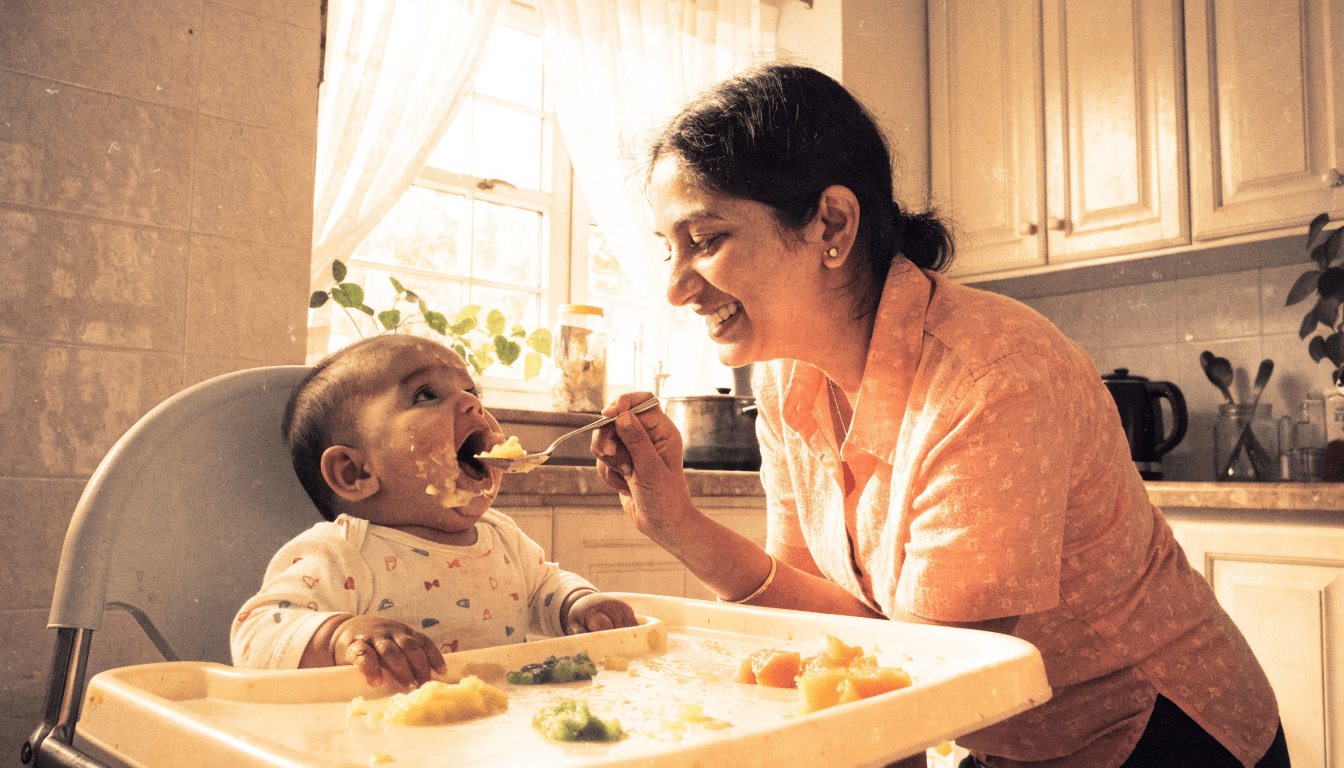
Narrate everything. "You're picking up the spoon. The spoon is in your mouth. You're chewing the spoon."
Use simple, repetitive words. "Mama," "dada," "dog," "milk," repeated frequently.
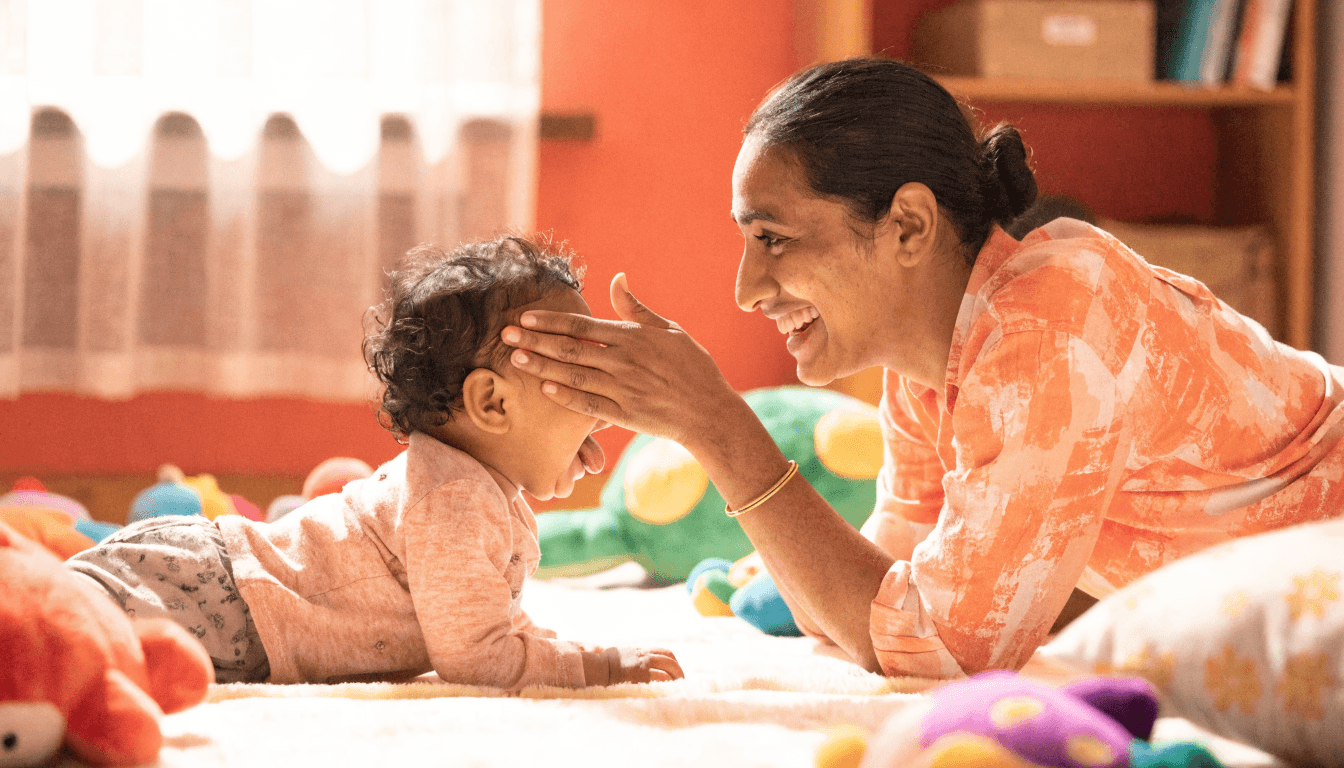
Play name games. "Where's mama? There's mama! Look at mama's face!"
Use gestures with words. Wave while saying "bye-bye." Point while naming.
Respond as if they're talking. They babble, you respond: "You're right! That's very interesting!"---
Months 9–12: Understanding Explodes; First Words Appear
What's Happening
This is the BIG stage. Receptive language (understanding) expands dramatically. Expressive language (speaking) begins.
Receptive Language
Understand 50+ words (huge range, some understand 100+)
Understand simple instructions: "Get your shoe," "Where's daddy?"
Understand "no" and respond (sometimes obey, sometimes test boundaries)
Understand routines and anticipate
Point to body parts when asked
Follow simple, one-step directionsSounds They Make
First words with meaning (9–12 months, or as late as 18 months for some)
"Mama," "dada," "dog," "uh-oh," "bye"
Often just one word, not full sentences
Jargoning (babbling that sounds like conversation in another language)
Lots of consonants, varied sounds
Gestures (pointing, waving, shaking head "no")First words characteristics:
Repeated intentionally
Refer to specific people/things
Understood by caregivers
Often accompanied by gesturesWhat You Can Do
Expand single words. Baby says "dog," you say "Yes! That's a big dog! The dog is running!"
Model language constantly. What you say, they hear. Hearing is learning.
Follow their lead. What are they interested in? Talk about it.
Use songs and rhymes. Language patterns embedded in music = learning.
Read together daily. Books build vocabulary.
Limit screen time. Language comes from interaction, not passive screen watching.
Talk about feelings. "You're frustrated. The block tower fell. You worked hard on that!"---
Bilingual Language Development (0–12 Months)
If your baby is exposed to multiple languages (Hindi + English, or any combination):
What to Expect
Less vocabulary in each language (compared to monolingual peers) BUT equal total vocabulary across both
Sound systems influenced by both languages (might skip certain sounds from one language)
Code-switching (mixing languages) is normal and healthy
Delayed bilingual explosion (compared to monolinguals)—by 18–24 months, they catch upCommon Concerns (Usually Not True)
"Bilingualism delays language." False. Bilingual kids develop on a different timeline, but not delayed.
"Mixing languages means confusion." False. Bilingual children understand which language is which.
"They'll be behind." False. By school age, bilingual children excel (higher cognitive load = brain benefits).What Helps
Keep languages separate when possible. One caregiver, one language works well.
Regular exposure to both languages. Occasional exposure isn't enough; daily is ideal.
Don't worry about code-switching. It's normal and smart.
Assess in both languages. If you're worried about delay, speech therapist should assess in both languages, not just one.
Celebrate bilingualism. It's not a burden; it's an advantage.India-Specific Bilingualism
Many Indian homes are trilingual (Hindi + English + local language). This is normal and wonderful. Development might look:
Fewer words in each language initially
Mixing languages in speech
Reaching developmental milestones on their own timeline (may look delayed in English only, but normal overall)Speech therapists familiar with bilingual development are important for accurate assessment.
---
Hearing & Language Development
Hearing is foundational to language development.
Signs of Potential Hearing Issue
Not responding to sounds by 4 months
Not turning toward voices
Not babbling or much quieter than peers
No language development by 12 months despite normal hearing previousWhat to Do
Most hospitals do newborn hearing screening (confirm yours did)
If you're concerned, ask for hearing test (audiologist, not pediatrician)
Early hearing support makes huge difference for language---
Developmental Language Disorders vs. Normal Variation
Normal Range (No Concern)
12-month-old with 0 words (but babbling lots, understanding many words)
18-month-old with 10 words (wide range is normal)
Late talker who understands language and communicates non-verbally
Baby developing language differently than sibling (normal variation)Signs Worth Mentioning to Pediatrician
12 months: No babbling, no sounds, no response to name
12 months: No understanding of common words
12-18 months: Regression (was saying words, stopped)
18 months: Fewer than 10 words AND not understanding language
Any age: Significant difficulty with comprehension
18+ months: Mostly jargoning, no intelligible wordsEarly support (speech therapy) works best. Even if it turns out baby is fine, early therapy doesn't hurt. If there's a delay, catching it early helps.
---
Red Flags: When to Check with Pediatrician
```
☐ 4 months: Not responding to sounds
☐ 6 months: Not babbling at all
☐ 9 months: Not understanding name or common words
☐ 12 months: No babbling, no words, not understanding language
☐ 12+ months: Regression (was talking, stopped)
☐ 18 months: Fewer than 10 words, not understanding
☐ Any age: Hearing concerns
☐ Any age: Family history of speech delay
```
---
Understanding vs. Speaking: The Key Insight
Receptive language (understanding) always comes BEFORE expressive (speaking).
Your 9-month-old understands "Where's the puppy?" before they can say "puppy."
This is normal and important. A baby who understands lots but says few words is developmentally on track. A baby who says many words but understands few words is unusual (worth checking).
If your baby isn't speaking yet but understands, you're on track.
---
How to Support Language Development (Universal Strategies)
1. Talk, Talk, Talk
Constant narration is the single biggest predictor of language success. Talk about what you're doing, what they're doing, what you see.
2. Respond to Their Attempts
They babble, you respond. They point, you name. They communicate, you receive. This builds conversation.
3. Read Daily
Picture books, board books, any books. Point, name, let them turn pages. This builds vocabulary and love of language.
4. Sing & Use Rhymes
Language embedded in melody = better learning. Hindi lullabies, English nursery rhymes, any songs.
5. Limit Screen Time
Passive screens don't teach language. Interactive, social language does.
6. Model Language
Your speech is their input. Clear, varied, interesting speech = better language development.
---
By 12 Months: The Summary
Typical 12-month-old:
Understands 50+ words
Says 1–3 words with meaning (or close to it)
Babbles constantly
Responds to their name
Follows simple directions
Uses gestures (pointing, waving)
Enjoys interaction and gamesWide variation is normal. Some 12-month-olds talk in sentences; others say nothing yet. Both can be perfectly fine.
---
Language is Connection
Remember: language development isn't just about words. It's about connection. Your baby is learning to communicate with you. The constant talking, responding, singing, and playing you're doing? That's building relationship AND language.
You're doing great.
---
Get Daily Language Development Insights
Rather than wonder if your baby is on track, get daily activities and observations matched to your baby's exact age and language stage.
[Start Your Free WhatsApp Companion →](/api/wa-start)
Every day, language-building activities and reassurance. Plus personalized milestones for your baby's age.